
14.1 Continuous, commonly known as Straight Pool, is a points-based game played with all fifteen balls, where players may attempt any object ball on the table as long as the intended ball and pocket are called. Each legally pocketed ball counts as one point, and play continues until only one object ball remains; the fourteen pocketed balls are then re-racked and play carries on, allowing runs to extend indefinitely. Because there is no required shooting order and scoring rewards sustained control rather than a single finishing shot, Straight Pool emphasizes precise cue-ball management, break-ball planning, and the ability to think several shots ahead while maintaining consistent execution over long runs.
The Rack
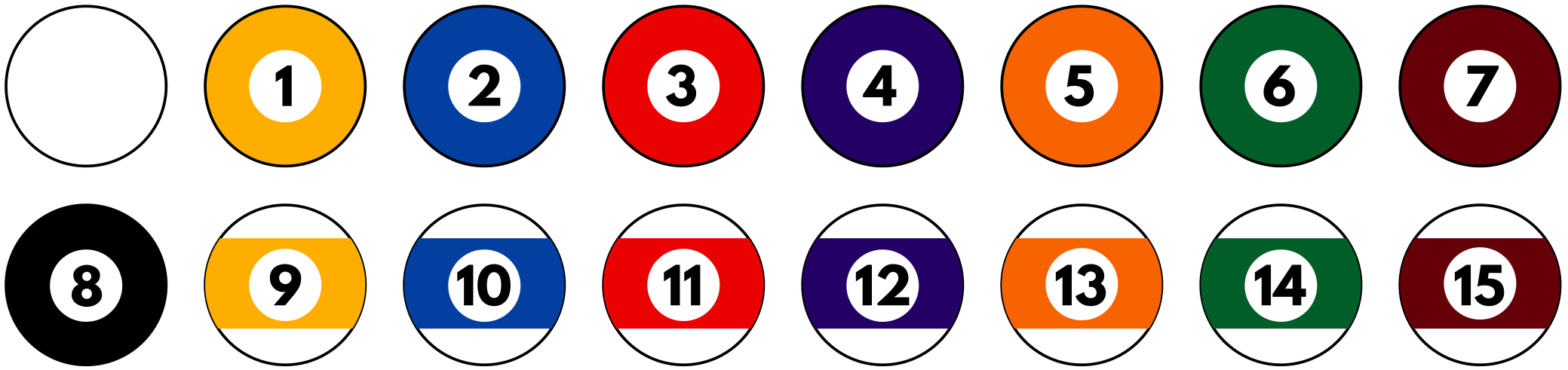
The cue-ball and object balls 1 through 15 are used.
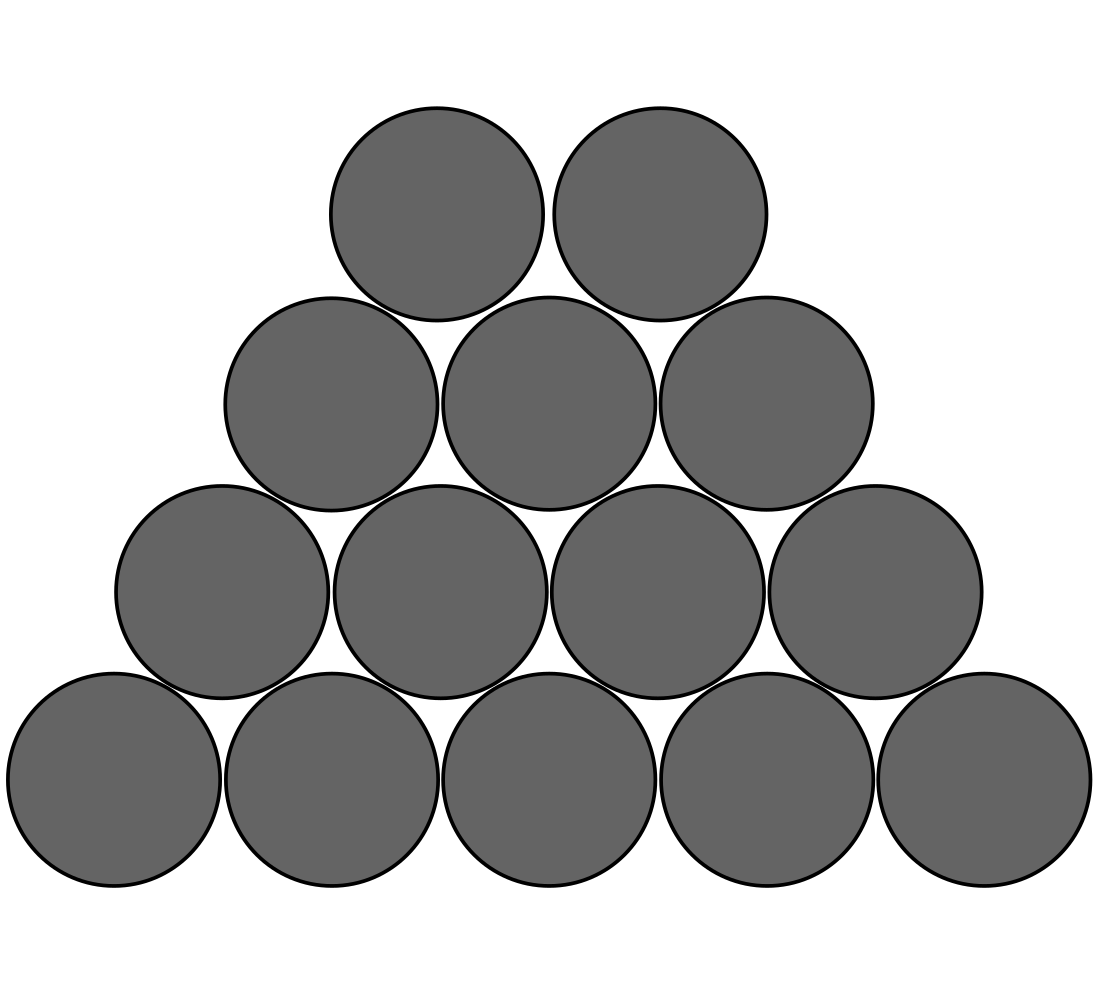
For an opening break shot, the fifteen balls are racked in a triangle with the apex ball on the Foot Spot. When the balls are re-racked, the apex ball is omitted if only fourteen balls are being racked. The marked outline of the triangle will be used to determine whether an intended break ball is in the rack area. If the balls are racked without a triangle, the outline of the triangle will still be drawn for the purpose of deciding whether a ball is in the rack area. A Ball Rack Template will not be used.
Opening Break Shot
Lag to determine first break. Unlike other disciplines, breaking in 14.1 is a disadvantage.
- The cue-ball begins in hand above the Head String.
- If no called ball is pocketed, the cue-ball and two object-balls must each be driven to a rail after the cue-ball contacts the rack or the shot is a breaking foul.
A breaking foul is penalized by subtracting two points from the breaker’s score. The non-breaking player may accept the balls in position or may require the breaker to play another opening break shot, until he satisfies the requirements for an opening break or the non-shooting player accepts the table in position.
Continuing Play and Winning the Match
The shooter remains at the table as long as he continues to legally pocket called balls or wins the Match by scoring the required number of points. When fourteen balls from a rack have been legally pocketed, play is suspended until the balls are re-racked.
Shots Required to be Called
14.1 Continuous Pool is a Standard Call Shot discipline. The intended ball and pocket must be indicated for each shot if they are not obvious. Details of the shot, such as cushions struck or other balls contacted or pocketed are irrelevant. Only one ball may be called on each shot.The shooter may call "safety" in which case play passes to the opponent at the end of the shot and any object-ball pocketed on the safety is spotted.
Spotting Balls
All balls pocketed on fouls, or on safeties, or without a called ball having been pocketed, and all balls driven off the table are spotted. If the fifteenth ball of a rack needs to be spotted and the fourteen balls have not been touched, the fifteenth ball will spot on the apex spot and the referee may use the triangle to assure a tight rack.
See , , and for more information.
Scoring
The shooter scores one point for legally pocketing a called shot. Each additional ball pocketed on such a shot also counts one point. Fouls are penalized by subtracting points from the offending player’s score. Scores may be negative due to penalties from fouls.
Special Racking Situations
A ball is considered to interfere with the rack if it is within or overlaps the outline of the rack. When the cue-ball or fifteenth object-ball interferes with racking fourteen balls for a new rack, the following special rules apply:
15th Ball In Rack
15th Ball: Foot Spot
Cue-ball: Above Head String
15th Ball Pocketed
15th Ball: Foot Spot
Cue-ball: Above Head String
15th Ball Above Head String; Not Blocking Head Spot
15th Ball: In Position
Cue-ball: Head Spot
15th Ball Below Head String; Not In Rack
15th Ball: In Position
Cue-ball: Above Head String
15th Ball Above Head String; Blocking Head Spot
15th Ball: In Position
Cue-ball: Center Spot
Standard Fouls
If the shooter commits a standard foul, play passes to his opponent. Incoming player has the option of accepting the balls in position or requiring offending player to shoot again with the table in position. If the cue-ball is in hand behind the head string, it is so for either player.
- The cue-ball is in hand above the Head String for the incoming player.
- All object balls driven off the table are spotted.
- The cue-ball is in hand above the Head String for the incoming player.
For , a point is subtracted for the third foul as usual, and then an additional fifteen-point penalty is subtracted, and the offending player's consecutive foul count is reset to zero. All fifteen balls are re-racked, and the offending player is required to shoot under the requirements of the opening break.
Stalemate
If a stalemate occurs, the players will lag again to determine who will shoot an opening break. The current point score is carried over.
See for additional information.